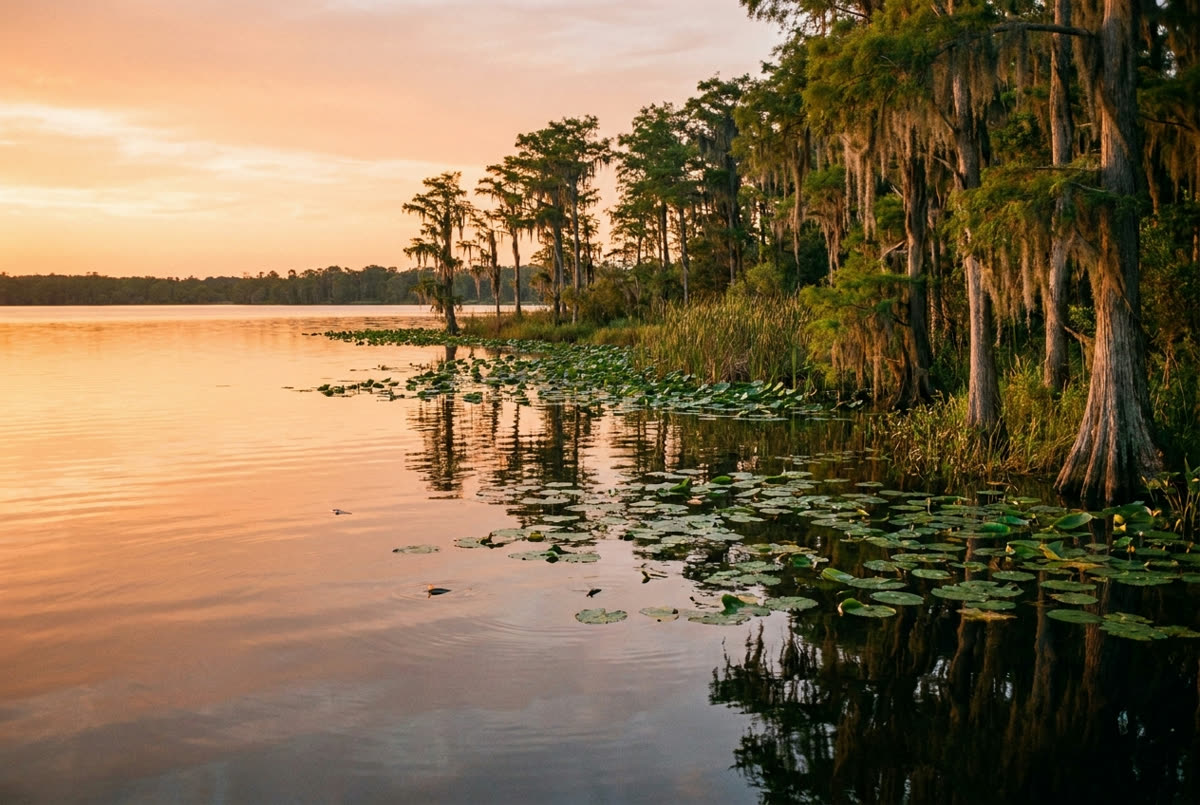
Crescent Lake sits southeast of the St. Johns and connects to it via Dunns Creek. It's a long, relatively shallow lake with a reputation for producing outstanding crappie — the local "speck" fishing draws anglers all winter.
Bass fishing is strong too, especially in spring when fish move onto the shallow shorelines and pads. It's a quieter, scenic alternative to the big-name waters nearby.
Known for
- Excellent crappie (speck) fishing, especially in cooler months
- Springtime shallow-water largemouth
- Quiet, scenic old-Florida shoreline
Target species
Through the year
Seasonal patterns
Winter (Dec–Feb)
Peak speck season. Slow-troll or spider-rig minnows and small jigs; find the schools and stay on them.
Spring (Mar–May)
Bass spawn shallow along the shoreline and pads — soft plastics, lipless, and topwater at first light.
Summer (Jun–Aug)
Early-morning bass on the edges; specks pull to deeper, cooler water.
Fall (Sep–Nov)
Cooling water reactivates both bass and crappie — a great, uncrowded time to fish.
Boat ramps & access
- Crescent Lake ramp — 1 Central Ave, Crescent City
- Lake Stella ramp — 519 Central Ave, Crescent City (nearby); Dunns Creek connects the lake to the St. Johns
Ramp hours, fees, and conditions can change — confirm locally before you go.
Local tip
For specks, cover water until you find a school, then anchor or Spot-Lock and pick it apart. When the bite slows, move.
Book a guide who fishes itCrescent Lake fishing — FAQ
- What is Crescent Lake known for?
- Crescent Lake is best known for its crappie (speck) fishing, especially in the cooler months, along with good springtime largemouth bass fishing. It's a quieter, scenic alternative to the larger nearby waters.
- When is the best time to catch crappie on Crescent Lake?
- The best crappie fishing is in the cooler months, roughly November through March. Slow-troll or spider-rig minnows and small jigs to find the schools, then stay on them.
- How is Crescent Lake connected to the St. Johns River?
- Crescent Lake connects to the St. Johns River via Dunns Creek, which lets fish and anglers move between the lake and the main river system.